Showing posts with label creative process. Show all posts

Friday, April 12, 2013

The Creative Process: The Idiosyncratic

 
This series is about the cross-over skills and concepts between creating art and doing genealogy. Admittedly, it's all very blue-sky.

Idiosyncratic:
1. A structural or behavioral characteristic peculiar to an individual or group.
2. A physiological or temperamental peculiarity.
3. An unusual individual reaction to food or a drug.
(Source: The Free Dictionary by Farlex)

I know that you know what idiosyncratic means, but thought it was a good time to run that in there. We're probably working with the first two definitions but let's reserve judgment on the third because, well, ya' never know. "Peculiar to an individual". Yeah, that about nails it for me. Peculiar. Individual. Yup. Hold that thought.

When I taught art at the local college, and after students mastered the basic skills, the thing they needed to do next was discover their individual gifts in art. What was it about each person that made them unique and able in some special way to contribute something, some statement or perspective, to the world? We were always looking for the idiosyncratic in each person.

When I first presented this concept, student, especially the young ones, looked at me in disbelief. Most of them had spent a young life believing that they were anything but special in any way whatsoever. Some had been told they were really nothing by family or teachers. For others it was the meager circumstances of an upbringing in difficulty surroundings. Even those who had an enriched family or community life found it hard to see that they could have a strong personal voice through their art. Never mind, I said, it will come. And it always did. Always. No exceptions.

Sometimes in a particularly bruised bunch of students I'd do a little exercise that involved talking about their pets. "Do you think you'd know your pet if it got lost and was returned by someone?" Sure! "What if it was returned with another animal that looked identical? Could you tell your pet apart from that other one?" Yeah, sure! "So you're telling me that your pet is that unique and you'd recognize their personality anywhere." Unanimous assertion that they could.

Now I have to say that these were really nice students, for the most part. They worked hard and aspired to the American dream of a family and a job that could support that family or contribute to the extended family they were presently a part of. So I asked them to think of all the people in that extended family, and the people who lived in proximity to them in their neighborhood. And to think of how each of those people was special in some idiosyncratic way. (They all really got into this exercise.) Then I asked them to think of a story about one person, and we shared some of those stories too.

Mostly, this was group work done in small groups of three to five people. Each group would finally pick one story from the group to share with the entire class. You see, much of art is really story telling and the thing that gives these stories that special something that attracts people to it is the idiosyncratic, or that which is peculiar to an individual. Peculiar. Individual. Finally they all got it, even if they didn't know right away what their own special something was.

Not to be heavy handed about the obvious, but let me break down for you what I did with them. First I let them realize that even their pet is unique such that they would undoubetedly be able to pick them out of a crowd. Then they were led to that specialness in the people in their lives, the ordinary everyday people especially. And by that route they were ready to admit that they too were special and unique in some way. All that was left was for us to uncover it.

I'm wondering if telling the ancestor stories isn't a bit like that? We look at the records first to find the narrative, the story: the who, what, where, and when of it all. But we look between the lines to see what's implied about the idiosyncrasies of our ancestor too. What is it about them that makes them individual and peculiar, that made them stand out in a crowd. We like that too, don't we?

Nutshell analysis and the obvious take-aways:
* We are, all of us, unique. So were our ancestors. All that's left for us to do is find the bits and pieces of them that are left in the records and stories.
* You are unique too, so don't forget to make time to tell your own story!


On Fridays if I make a new post in the Creative Process series, I'll also post a painting of mine... just in case you don't care for the post, you might enjoy looking at the painting instead:)

"Torrey Pines Beach"
24 by 24 inches, oil on canvas
Diane K. Weintraub

The URL for this post is: http://nutsfromthefamilytree.blogspot.com/2013/04/the-creative-process-idiosyncratic.html


Friday, April 5, 2013

The Creative Process: Can I Afford My Hobby?

 
This series is about the cross-over skills and concepts between creating art and doing genealogy. Admittedly, it's all very blue-sky.


When I was teaching studio art at the local college back a ways, a goodly number of students were taking advanced drawing for personal enjoyment and were what we might call "older learners" who came joyfully to this adventure after working a lifetime. They had earned it and now were fulfilling a dream to make art. Some had nurtured a fantasy of painting their way through retirement making and selling art. A lovely dream.

One of the shocking things that hit them when they took the first art class was that making art costs money, a lot of money and there were many who forgot all about it after getting the supplies list on the first day of class and joined a book club instead. It often seemed to me that everyone was making money on making art except the artists.

Having been at one time a fool for art, I decided not to travel down that same road for genealogy. I set a strict budget for monthly expenses and try to stick to it. When it's gone, I wait until next month. No telling myself, I need that, as an excuse to splurge. My subscriptions are a big chunk out of the budget and if I don't use one for a week or so, I sit here wondering if I need it or not. Oh sure, I could wing it and just spend freely, but knowing myself as I do, I like that feeling of being in control of the money I throw at finding solutions to brick wall problems.

In the classroom I always felt bad for the students who couldn't spend a great amount of money on art supplies. A lucky affluent few bought anything they wanted and always came to class with too much stuff carrying every imaginable art supply. But you know what, it didn't make them better artists than the rest. As a matter of fact those who did more with fewer supplies and really knew how to use them were the artists who succeeded and impressed the rest of us. I wonder if that's true in genealogy?

It seems in this realm of hunting down your ancestors no one hardly ever talks about how expensive it can be, and how exclusionary that can be, separating out those who can't afford some subscriptions, books, or tools from those who can. It's all about access isn't it? Equal access. That's one thing that I especially like and respect about Family Search. It's free to all. And so was the live stream of RootsTech sessions. We all like that, don't we? Count my vote in the column that believes that the more people out there doing genealogy the better and healthier will be the community in general. But that's just me:) How about you?


Nutshell analysis and the obvious take-aways:
* It's about equal access that doesn't depend on ability to pay and that's more inclusive.
* If you have access, can you share what you have with others? Sponsor a local library's access to a paid web site? Donate a subscription to a raffle? Oh, come on, you'll think of something:)


On Fridays if I make a new post in the Creative Process series, I'll also post a painting of mine... just in case you don't care for the post, you might enjoy looking at the painting instead:)

"Pacific Waves"
24 by 30 inches, oil on canvas
Diane K. Weintraub

The URL for this post is: http://nutsfromthefamilytree.blogspot.com/2013/04/the-creative-process-can-i-afford-my.html

Friday, March 29, 2013

The Creative Process: To Frame or Not to Frame?

 
This series is about the cross-over skills and concepts between creating art and doing genealogy. Admittedly, it's all very blue-sky.
 

OK, please understand that I'm not talking about the physical object you put around a two-dimensional work of art, as in, I really need to get that painting I just bought framed down at the frame shop. This is about a very handy concept (that I forgot and just remembered) called "framing" a work of art: using frame of reference to help define the work and its meaning. As genealogists we use framing when we look at a record and ask ourselves, what exactly am I looking at?

For a while I volunteered as a docent in the San Diego Museum of Art. As a tour guide to all manner of folks it was incumbent upon us to be as informative (and entertaining) as possible, and we all figured out that the task was best done by letting the adult visitors guide the guide. So I'd walk up to a likely couple looking at a work of art - and here I might mention that we had to know something about all 10,000 works of art in the museum - and engage them in conversation, sort of like cocktail chat but with a purpose.

One of my favorite opening question went something like this:, "Oh, I see you're looking at that Van Dyke. Do you like it?" That was a safe bet because people who didn't know anything about a Van Dyke did know if they liked it or not! So I used that liking or disliking and the specifics of it as a springboard to sharing more information about that and other works in the museum.

It all got especially dicey in the Modern and Contemporary galleries. People had strong opinions there! But no matter which side they fell out on, for or against, once they knew what the artist's intention was they had a frame of reference and they could appreciate it more... which didn't necessarily mean they ended up liking it. Wasn't my job to convince them. Hey, we like what we like.

So here's the thing about framing and establishing a frame of reference. You can walk right up to, say, a contemporary work of art and try to "appreciate it" but you probably won't get very far going "unframed." If you want to be involved with a work it's best to bring all manner of information as a "frame" for the work.

I thought about this as I was doing some research recently. I found myself looking at a document from the late 1700s in Virginia. I knew some small amount about the community and that the place was still in Virginia but on the frontier in land that would 100 years later be West Virginia. This document needs to be "framed" properly I thought so off I went to find out as much as possible about the records set and how and why and where it was made and for what propose... much as I would if I was standing in front of a work of art and thinking, what's this about?

This sure isn't rocket science to all of you who have been doing this genealogy thing for a while! You automatically frame the record you're looking at right away rather than getting head over heels at finding great uncle Sammy. For me, I reminded myself again that I can't have too much information about the document I'm looking at and to never make any assumptions about it! The Virginia record was a tax record, and it was only an index. "Not an original work of art at all!"

Nutshell analysis and the obvious take-aways:
* Find out as much about the record that you're looking at so as to better frame it.
* You don't have to like all the works hanging in a museum!


On Fridays if I make a new post in the Creative Process series, I'll also post a painting of mine... just in case you don't care for the post, you might enjoy looking at the painting instead:)

"Borrego Badlands In Bloom"
24 by 40 inches, oil on canvas.
Diane K. Weintraub


The URL for this post is: http://nutsfromthefamilytree.blogspot.com/2013/03/the-creative-process-to-frame-or-not-to.html

Friday, March 22, 2013

The Creative Process: Many Things to Many People


This series is about the cross-over skills and concepts between creating art and doing genealogy. Admittedly, it's all very blue-sky.


I put a bit of new into text up at the top there because I am at the point where I'm kinda tired of trying to explain myself every Friday. Hope it's working and if you have another way to say it, please give a girl a hand and let me know:)

This week, let's chat about one of my very favorite concepts surrounding fine art and that's the idea that art is many things to many people (and so is genealogy). Some at the top of the food chain make plenty of money making or selling art. Big time artists, curators, gallery owners, dealers, and oh yes, art thieves are at the top. In the middle are the neighborhood galleries and frame shops, small-time dealers, art school professors, and only about 10% of all the artists who work at it full time and clear more than $10,000 a year after expenses. At the bottom of the food chain are part time art teachers usually working on contract for schools or teaching workshops locally, and the 90% of practicing artists making less than $10,000 a year. It can be very competitive (and often ugly) at the top as artists elbow each other for attention of a tiny collector base. Dealers will sell dear old mom for a rich collector relationship. I could tell stories, but not here because all are just plain mean.

The bulk of individuals who are interested in art don't make a dime on it: they spend money on it but not a lot. That group includes hobby artists who take workshops or classes, and art fans who go to museums and occasionally purchase a piece for their home because they love it and want to live with it. Typically the folks at the top openly express great disdain for anyone in this level. I've seen things and it wasn't pretty.

As you see, art is many things to many people. Some are just interested and are fans. Others want to try their hand. A few love how it ties into history and read about it and visit museums. Some get quite good at making art, often after a career in some other field. The young and ambitious want and need to make a living at it and there are legions of dealers ready to sell their souls.

While I was involved one way or another in the world of art I had much respect for anyone trying hard to make a living at it, especially if they didn't have a name art school education or a relative who owned a big gallery or was placed at a New York or LA museum or auction house. I'd give these folks a break whenever I could because it's rough out there.

You have to love the folks who retired and jumped right into making art! They are starry-eyed and love it in a pure way with enthusiasm. Or the people who work at a 9 to 5 job and make art on the dining room table on the weekends and holidays, especially the ones who have persistence and work at it off and on over years. For them, life comes and goes but art sustains and is always waiting for them. And it's a private place for their refuge. Knew a woman who took care of a gravely ill mother for many years and would hurry out to a small space in the barn to make art whenever her mother was safely in bed. She worked for just 15 minutes at a time for many years producing a beautiful body of work. She said to me, "It kept me sane." Much respect for her.

And I'm thinking that genealogy is like that too. There are the professional and/or certified genealogists who know where the goods are and nobly go get them for us. I read their blog posts, books, and take their classes and learn, picking up whatever crumbs they are willing to share and am thankful that they are so generous. It must be difficult for them to give away the knowledge they paid to get, one way or another. Much respect to each in his or her area of expertise as they try to make a living.

There are others who work in these fields because of love or devotion, hoping to find as many ancestors and relatives on as large and expansive a tree as possible. They work and learn often due to the "kindness of others" who share and help with no monetary reward. Many have been doing this work out of love and devotion for an awfully long time. Some teach or run blogs and often have the most practical knowledge. They are admirable and are happily still learning with the rest of us. Deep respect to them.

Then there are what we might call "hobbyists" for lack of a better word and we do need a better word, who perhaps came to this pursuit after a day job or now that they have retired. We come and we go, but love genealogy because it touches some note or chord within us and often moves our hearts. Yeah, we're not much in the eyes of others perhaps, but we have the love and passion for it as we stumble through the night looking for a wee bit of morning and keep searching for those we knew and loved and went before and others we're just now finding and claiming as our own.

Here are some tips for the "hobbyists" about dealing with the professionals, shamelessly swiped from the world of art and dealing with career artists, dealers, and gallery owners. For genealogists especially, supporting the professionals makes sense all around.
* Know the professional and respect their status. If they have click through ads on their web site, this is a pro. Help the pros you like by clicking through and checking out the wares. You might find the next new thing you couldn't live without.
* Give a pro a helping hand. See if you can understand where they make their income and don't ask for anything they charge for for free. Just makes it all awkward. If you are able, use their services and pay. If we don't use their services they won't be around down the road, and we need them to be here.
* Understand that there are pressures that come with trying to make a living doing this work. Most are entrepreneurs and running your own business is never easy, especially in difficult economic times. Be patient and give them the benefit of the doubt. If someone is a tad snippy it probably means they are dealing with an issue.
* We're not all equal, the pros and the semi-pros, and the rest of us. There is a hierarchy and it's good to know where you fit so that you don't step on toes.
* Give respect and send love and support to the pros you like and maybe our pros will send the love on back. They really should because that's where their bread is pleasantly buttered:)


Nutshell analysis and the obvious take-aways:
*  The art world is crazy.
*  We over here in genealogy are real nice folks.
*  We know that and are planning to keep it that way because we're smarter than they are;)


Photo of the day from Aunt Betty's Archive:

The Williams Boys, sons of my GGF Daniel Williams, except for James Price who was my GGM Jane Price Williams' brother. Just realized that Daniel wasn't in this photo because he died in 1920. Gosh.


The URL for this post is: http://nutsfromthefamilytree.blogspot.com/2013/03/the-creative-process-many-things-to.html

Friday, March 15, 2013

The Creative Process: A Derivative Work

 
In art, a derivative work is a work of art based in part or in whole on a previously existing work of art, usually a famous one. It's also called "referencing" and the assumption is that the artist is going to reference a well known work such as the Mona Lisa otherwise no one will "get it." The derivative work is allowed to stand without copyright infringement because the artist who made the derivative work has enhanced or expounded on the original and not simply made a copy of it.

Bear with me here as I review the various types of artistic copying because it relates to a discussion on one of the genealogy boards of late about putting your tree and information out in the world. And I have to confess that I feel a tad sheepish about this post because I'm just a beginning intermediate genealogist and there's so much I don't know and haven't been exposed to. But, it could be a topic/issue worth discussing and so here you have it, and my rather stretched analogy to the world of art. I hope no one, especially the most experienced amongst us, is offended:)

There are two additional categories of art that stand on the tall shoulders of the work of others. Have you ever been to a museum and seen an artist in front of a painting making a copy? That's a copyist and you hardly see them anymore. Used to be that any artist could waltz into a big museum with their painting equipment and plunk it down in front of a famous painting and start making a copy, but not now and you can imagine why. Being a copyist is a legitimate way to learn and the old French ecoles of long past insisted that students do their fair share of copying. In this situation the artist has no right to offer the work for sale under any conditions and to do so is a violation of all that is respectable in art. (And there is at present a lot in the art world that is not respectable.)

There's also another way a painter honors the work of a master painter and that's by copying their master's painting and titling it "Landscape, After Rembrandt." In this way there is no doubt that the lovely scene the viewer is gazing upon isn't a real Rembrandt, nor is it the original work of the person who signed the painting. This route is often taken by students of a living master and with the master's permission, although I have seen contemporary works "after" long dead masters. That's considered poor form and totally unprofessional. To title a work "after", the guy who painted the original must give you permission to make a copy and critique your work, otherwise it's just a cheezy painting.

Then there's plain and simple ripping off and copyright violation. Artists learn from a young age what constitutes copyright violation as regards derivative work. If you do it, it can ruin your career and your bank account as you try to defend yourself through the legal process. Here's a blog post by a painter friend of mine, Denise Rich (not the socialite) who paints cows, and boy is she good, about her run-in with someone who was not honoring her work by copying but simply co-opting her image to make a profit.

OK, so now back to genealogy. The discussion on a genealogy board that got me thinking about derivative work was about bait trees, or trees posted to a web site to attract legitimate interested parties, A.K.A. "cousins", or to lay in wait with erroneous information for data thieves. If copied, the trees with purposeful errors will show the copyist's slovenly ways to all who care to look.

Some of the discussion also lamented the scarcity of those who were willing to collaborate (honorably) and share work and credit. I get that. I feel bad for genealogists who have gone before and posted their fine work only to have it stolen by others without a bit of credit where credit was decidedly due. No respect.

I have no answers here, and maybe I should have told you that at the start so you could have decided if you wanted to waste your time or not. Sorry, truly. But this is a problem, I think. And maybe it would be nice for those with some years under their belts doing this work to give it a think, and perhaps they have and I've just not run into it yet. In all the fields and work spaces in our genealogy program, and correct me if I'm wrong, there isn't a place to sign the work, a place to say who found information and that source. We know how to cite sources (I'm working on it) but how do we "sign" our trees? Maybe we just assume that putting the tree online under your name is enough, but what happens when that work is copied?

We're all told is to do our own work and start all over again at the beginning with a new tree and research every last detail and cite our sources well. That is an excellent way to learn. However, the body of human knowledge, I think, generally does not benefit much from this approach... but I see no other route for people to take when doing genealogy: it's not ethical to "steal" a tree and precious few are willing to share. "Got mine, go get your own." If only we could build on what others have done in some organized acceptable way then we could spend our efforts moving along. Maybe this will be the beauty part of the FamilySearch Family Tree?

Maybe if we could "sign" our work in some fashion we'd be happier to share it, and I think sharing the work is where we all benefit most. If we share the work then presumably good drives out bad as the work gets checked and rechecked. Open source seems the way to go: sign the work, give the trees out and let the chips fall where they may as we stand behind what we did and are happy to be updated and corrected. If I knew who originally found that piece of info and where they found it, and that the finder's name was attached to that place on the tree then I could honor that person... or that person's memory.


Photo of the Day from the Archive:


Eckhart Cemetery in Eckhart Mines, Allegany, Maryland.
Many of my ancestors are buried here. Some day I have to make a list!


The URL for this post is: http://nutsfromthefamilytree.blogspot.com/2013/03/the-creative-process-derivative-work.html

Friday, March 8, 2013

The Creative Process: The Ability to See


Anything I picked up about the creative process and how the mind works in that regard comes from years of being a landscape painter and then teaching art on the college level. Recently, as I dig deeper into this genealogy stuff, I've noticed that much of that information also applies to the work we do here. And let me say at the get-go, I am relatively new at researching and writing about the ancestors so we'll leave those skills to others way more learned than I am! But what I am doing here is bringing little items from one area and repurposing, if you will, to another. An old teaching and learning adage says, adapt and then adopt. Take a skill from one discipline, adapt it to the other and then adopt it.

Today we'll chat about "seeing", or seeing into. Most people "look" but they don't "see". I know that you're smart and you get that right off the bat. You understand how a person can look right at another person and not notice the new shirt or hair color, not mentioning any names;)

It was funny with new drawing students just beginning their journey in art. Three categories of students came my way. The graphic design students were after that certificate in graphic design so that they could go get a job. Most were impatient and just wanted to get the three credits and leave in peace and get on to the next thing. They didn't understand the cross-over skills they might acquire by learning how to draw, never mind the clients they could impress by whipping out a cocktail napkin and drawing a sketch of that web page. You can read a very interesting article here about the cross-over skills of drawing and computer coding.

In the second category of students taking drawing were the fine art students who wanted to go to a really good art school and be an animator or illustrator. They already knew about seeing into a subject to catch the essence and taking that information and translating it into a new reality based on the perceived world. They were passionate about the work and invested enormous numbers of hours refining their portfolios.

The third category and the folks I like best (shh, don't tell) were the older students. This group came to the learning with an unrushed attitude and were willing to try it all. Now, who wouldn't like that in a learner?

The thing was, that in order to learn to draw you have to be willing to slow down enough to be able to see and take close notice of what you're looking at, take it all in. The graphics design student wanted the three credits as quickly as possible and got frustrated by the slow pace of sitting in a room drawing what was in front of them. The art school students would spend all day or all year getting that one turn of the object right, and good for them. But the older students knew how to slow their pace, how to engage their brain, how deep to go... and when to stop.

Some people just can't "see". They can't let go of a false reality long enough to learn a new way to do things. Had a young woman who was known in her circle of friends as a good cartoonist. She came is ready to show me her portfolio of sketches and characters. I looked and listened and thanked her for sharing. Everything was cool and friendly. Then we started to draw. She found right away that she could only draw from images she imagined in her head and when she was to inspect a real object sitting in front of her and draw it recording every detail, her brain couldn't handle it. She simply could not let go of one system that was working for her and exercise self discipline enough to learn. She cartooned her way through the semester and we parted barely on speaking terms because she never let go of the old way.

I find myself examining my own practice of genealogy and asking myself if I'm ever looking but not seeing. It can happen. Like the graphic design students, I might get in a rush to get to the next thing. I know that I've done that when I miss something obvious and see it later, wondering how I could have done so.

Or like the art school students, I might dive too deep and waste my time not learning what I need to. A person sure can use up tons of hours flitting form record to record!

I remember my older students and try to pace myself, taking time to see into the work, but keep it moving along. And I remember that young woman who, by contrast, couldn't see at all and therefore missed a whole wonderful world because she only wanted the one reality she imagined to be true. It's a difficult balance.


Nutshell analysis and the obvious take-aways:
* When you can manage it, try an unrushed attitude.
* Ask: what's right here hiding in plain sight?
* Keep the brain engaged and fresh.
* Be willing to let go of the old so as to allow the new to come in.
* Ask yourself: where do I stumble when I'm trying to see? Is this a pattern?


Photo of the day from Aunt Betty's Archive:


The URL for this post is:  http://nutsfromthefamilytree.blogspot.com/2013/03/the-creative-process-ability-to-see.html

Friday, February 22, 2013

The Creative Process: Introspeciton

I really like being by myself, alone with my thoughts. Mom does too. Don't get me wrong, we like other people... well, most other people. But a real fun time for us, after being with family, is to be alone with books and thoughts figuring stuff out. I've noticed that this is a trait shared by many genealogists and that's good because if you don't like working on your own then I really don't know and can't guess how you'd do genealogy. As a team sport?

It wasn't until I read Eric Maisel's book A Life in the Arts, that I understood how the artist in me - I was a painter at the time - sought out alone time. He writes on page 31:

It's one thing to be intelligent and another thing to enjoy thinking, to relish time spent alone with one's thoughts, to happily muse, imagine, and analyse.

I get it, I do. I get it in my gut. Time left alone to think and look at the issues from all sides. Maisel goes on to point out that artists (and if I can suggest, genealogists as well) are not contemplative because they are at odds with the world. No, rather they are busy trying to figure it out. They like the intellectual pursuit of a stated goal, feeling like they're going somewhere with that thought. It just feels like you're at odds with the world if you can't carve out time to satisfy this urge.

And like artists, the proficient genealogist is better able to exercise their options with a fully developed set of skills. How often have you heard someone looking at an abstract painting say, Oh my kid could do that. Actually, no your kid couldn't do that because you're looking at something that's highly sophisticated and extremely difficult to do. (And yes, all the TV kids you see called Pint-Sized Picasso... all proven FAKE!) Now think of the commercials with the shaky leaves... looks easy, no?

Time alone with your thoughts. Golden. The skills to do what you see needs to be done? Diamonds, all.

Nutshell analysis and the obvious take-aways:
* You like alone time. It's cool.
* Protect that alone time, even demand it if you must.
* Maisel says that this thoughtful "dreaming" keeps us young. Feels that way. Aren't you just a kid in your heart?


Photo of the day from the Archive:

Aunt Christiana (Chris) Kelly Fraley riding a bike and feeling like a kid, about 1942.


Friday, February 15, 2013

The Creative Process: Blocks

If you've ever been sick or injured and couldn't work, in pain and couldn't work, sad because of the loss of a love and couldn't work, then you've been blocked. Had a cold? Work space too messy? Just plain tired? Yeah, blocks all.

As Eric Maisel, PhD writes in his book, A Life in the Arts, (NY, NY: Putnam, 1994). "All human beings are regularly blocked. It is one definition of being human that we regularly fail to actualize our potentialities."

It's useful to recognize a block as soon as possible and implement a strategy custom tailored to both you and the block so you can get back to work soon. Keeping the work rolling along is what it's all about. We all want full, actualized lives.

After a car accident, it took a year and a half for me to be able to physically get back to the painting I was doing before the accident. Luckily I recognized it for what it was, didn't feel guilty that I couldn't meet a demanding schedule, gave myself time (lost a cherished teaching job at the local college) and grieved my losses. At the right time I began working again. Blocks are not to be minimized or dismissed because if you do either it's just going to take that much longer to get back on the horse.

So let's look at some of Maisel's blocks and what to do about them. These are just a few and if you find that your work, whatever that is, is sagging you might just want to get his book and see what's troubling you. He's a therapist who specializes in creative types, and hey, aren't we all just creating a life? So here are a few blocks that can get in the way of working on genealogy. How about a half-dozen? It's a start.

1. Self-criticism
Want to start a blog but afraid that the genealogy world will pounce all over you and your poor performance? Listen to that voice in your head, Maisel says, and ask where it's coming from. Then write down what its saying and who is saying it. When it comes up next, answer back: OK, I hear you but hush now, I'm busy here writing my blog, and we can talk later.

2. World-criticism
You think the world at large and specifically the world of genealogy is too..... (whatever, fill in the blank.) Too fussy about those source citations, too hungry after your information? Yeah, the world can be an ugly place. Mr. Rogers' mother told him that when bad things happen, "Helpers" are also there and that he should look for the Helpers. If the world looks ugly, look for the Helper people. They are there and they'll help you through. All in all, the genealogy world, full of self-taught folks, is very eager to help you. Just ask. And when we're not asking for help we too can be a Helper.

3. Conflicts between life and art (or whatever you want to do)
This might be a big issue for those working 9 to 5. Or any of us who also have a life, and that's everyone. I marvel at how much others get done and often feel I come up short. Then I have to tell myself that they are not me, they are not doing my life. Some days the genealogy just doesn't get done. Some days the food, and I love to cook, is just not going to make it to the table, all done from scratch, so it's crock pot time Give in to that other life, Maisel says, but carve out time for your needs as well.

4. Environmental blocks
I tell myself, if only I had a nice new and powerful laptop I could get way more done because I'd carry it everywhere. Maybe. But that thought shouldn't get in the way of me doing work in the here and now. Work space too messy? Files too disorganized? All of that can be identified and fixed. If your environment is just too something, take stock and fix that. You'll feel better.

5. Skills deficiency
This can be a biggie because, well, aren't we all always learning? And aren't the skills always in a state of flux because the information out there is always changing, as well as the technology? The Cook County records aren't there anymore so how we gonna find when he died? And is Family Search going to change this week? It can make a person feel as though they hardly know anything at all. I bet more people feel this than talk about it. It can't stop us!

6. Myths and idealization
 Mayflower Society? DAR? Colonial Dames? A tree with 100,000 people on it? Every source properly cited? FAN principle used? When I sense the work yet to be done on the family tree, it feels enormous, if I intend to do it "right", and I do. ("Right"...? See number 5, above.)

I'm just an always-learning, entry level, intermediate part-time genealogist with a passion for cooking, a loving family that "lets me be" now and then, and a dog that's 16 going on 3. Life is full and I need to count my blessings, then move beyond my limiting blocks. You too?


Nutshell analysis and the obvious take-aways:
* Blocks are part of the territory when you are about the business of making something out of nothing.
* Identify what the blocking is about.
* Next, figure out a fix.
* Ask for help. Ask the Helpers. Thankfully, they are all around us.


Photos of the day from the Archive:


These two pictures remain unidentified. The top one is probably from Mom's Whetstone or Williams side. The bottom one might be some Zeller children. We'd love to know.


Friday, February 8, 2013

The Creative Process: Can We Get Some Empathy Up In Here?

This series about the creative process is sort of an outlier when it comes to the world of genealogy where what we know is based on factual (preferably;) sources we can point to and cite. Hopefully, the creative process doesn't influence that work, even though we've all see a tree or two that looks like there's been some creativity going on.

What this series is about is using creative thinking and creative problem solving to work out genealogy problems. Where did they go, what did they do next, and looking for answers when the obvious solution just doesn't pan out.

We can also use the creative processes and strategies and stretch our creative muscles when we bring our research back to the family and present it in a form and format that gets them interested in their heritage or preserves it in a way that informs generations to come. Guess I'm thinking about all of this because I'm participating in the Family History Writing Challenge.

So with that in mind let's take a look at a very useful tool in the creative process, our human ability to empathise with another human being.

While reading Eric Maisel's book A Life in the Arts, I was struck by his exploration of how artists use empathy. Artists, he says, have an overly large empathy thing going on. Did you ever look at a painting and think, how did the artist get it so right? Artists are able to "leave" their own reality and put themselves in the other persons shoes, and do it so very well that they get inside the mind and state of being of the subject. They jump in their skin, so to speak, and get us viewers or readers totally lost in the subject matter.

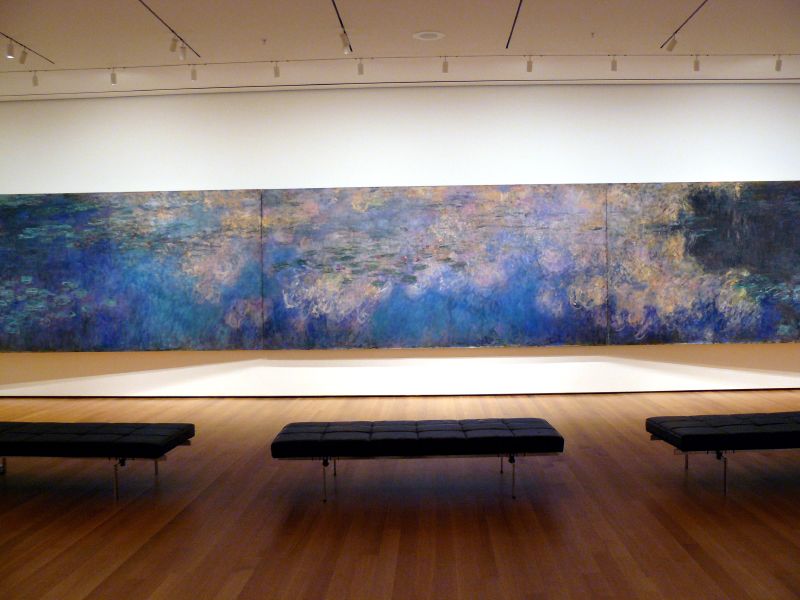
Here are a couple of works of art that usually do this for the viewer: Rodin's Piata, and one of Monet's Waterlillies Series. They usually make the viewers wonder and marvel at how the artist can allow the viewer to enter the scene and feel what's going on. And which of us hasn't gotten so lost in a novel that we'd swear the people were just about real? Because the artist is empathetic and has the skills to write or paint, we see what they did, and feel it in our own hearts.


Click!
(Courtest, Web Gallery of Art)
 
File:WLA moma Reflections of Clouds on the Water-Lily Pond Monet.jpg
(Courtesy, Wikipedia Commons)

Maisel points out that this ability to set yourself aside isn't normal. Who does that just for fun... set your own ego out to dry and inhabit the very skin of someone else? Most people can be compassionate and sympathise with someone else but to empathise is special. Maisel says this about empathy:

It is rather a certain kind of insight, an ability to correctly identify the thoughts and feelings -- even the whole inner reality -- of another person.

And further along he points out that the artist who empathises most can often have the hardest time maintaining sufficient boundaries between herself and the subject.

Ever get so lost in imagining the adventures and trials of an ancestor that you dream about them or think about them all the time? Have they entered our consciousness in an overly deep way? Maisel points out that empathy is the key to a deeper understanding of someone else... but don't get lost. Tricky, that!


The URL for this post is: http://nutsfromthefamilytree.blogspot.com/2013/02/the-creative-process-can-we-get-some.html

Friday, February 1, 2013

The Creative Process: One Brick From the Wall

It was the late 1970s and I was working as an art director for a New York City ad agency. We worked in creative teams, one art director and one writer to a team, under Big Sherm, or Sherman the Creative Director. As a reward Big Sherm sent a couple of art directors off to a creative skills building workshop one Friday afternoon. Funny thing, I picked up some ideas that day I still use, and continue to use in genealogy all the time. They're kinda basic, really, but just thought I'd mention what happened to see if any of it is helpful to you:)

It was a big room with those round tables you see at conferences, 8 to a table. I picked a genial looking group of friendly, laughing folks and sat in an empty chair. The speaker wasn't much older than most of us but had command of the room right away. "OK, here's what we're going to do. Each table is going to come up with as many uses for a brick as you can think of. Somebody volunteer to write all the uses down and keep a list. Let's see which table gets the most. That's the objective: the table with the longest list wins. You have 15 minutes for this. Now GO!"

Seriously?! You have to be kidding, this is silly! Nervous laughter, then giggles, but just a few. Would there be a prize, someone wondered. Certainly bragging rights, another offered. Then we got down to business.

The first wave was full of all the obvious and practical uses and functions for a brick. Maybe we had a dozen on our list. Someone pointed out that there was no test of rationality or practicality for this assignment and the goal was to make the longest list. Then we really took off... and got kinda crazy!

After 10 minutes we ran dry. But we looked at the clock and knew it was crunch time so we dug deep to find even more uses for a brick. Some one, I forget who, started analyzing how practical and worthy the uses were because it was getting real nuts. About that time the presenter walked by and interjected that we were not to evaluate but simply make the very longest list possible. We took off again!

At the 15 minute mark we were bone dry, but time was up. Then the presenter told us we had 10 more minutes. Groan! How can we do this for 10 more minutes? But we did. Then a magical thing happened: we really let it all flow and came up with some of the most inventive solutions of the day. Some were surprisingly good.

As I remember, and I probably don't because it was so long ago, our table had about 38. The high table had at least 10 more than that. Imagine! Almost 50 uses for a brick!!

So what is it that I remember and took away from that seminar? When doing creative problem solving, the obvious solutions might be the good solutions, but they just might not be. When you think you've run out of options, have some coffee and give it a moment because you haven't gotten to the good stuff yet. Don't worry when you get to a dry patch, because the better stuff is bubbling just below the surface. Wait. It will get here. And go a little crazy.. maybe your ancestor did do that wild thing you just thought of.

I think, looking back on it, that seminar was all about persistence. That's a big component of the work we do as genealogists and creativity in general. And trusting yourself to wait out the rough patch and knowing that better stuff is waiting... just past the next brick.


Nutshell analysis and the obvious take-aways:
* Sometimes the obvious answers are right, and sometimes they are not.
* When brainstorming, it's usual and normal to turn dry after a short length of time. Doesn't mean that's all you have and that you're finished. Don't be fooled.
* Don't judge yourself. Just feel free to think of all the possibilities no matter how ridiculous. You can sort later.
* Give it time. Sit with it. Go slow. Maybe take a break and think of something else if that works for you.


Photos of the day from Aunt Betty's Archive of the Daniel Williams family:


Thomas Williams 1890 - 1950, William Williams 1894 - 1964, James Thomas 1882 - 1936, 
and their father  Daniel Williams 1852 - 1920. 

Jane Price Williams 1862 - 1939, wife of Daniel Williams and mother to the boys, above
with her brother James Price 1865- 1933.

That's Mom and her sister Dot holding hands in the front row with their mother,
Emma Whetstone Williams 1897 - 1956.

Daniel Williams family home in Ocean, Allegany, Maryland.


The URL for this post is: http://nutsfromthefamilytree.blogspot.com/2013/02/the-creative-process-one-brick-from-wall.html

Friday, January 25, 2013

The Creative Process: The Perfecting Spiral

OK, so let me say at the get go, one sure way to kill creativity is to embrace "perfection." Perfection is an intellectual construct designed to drive us mere mortals nuts. So forget about perfection. I'm using the concept of perfecting in the global sense of improving your craft, whatever that craft might be. Have a hunch that if you think about "perfect" when doing genealogy, you'll be miserable! Or am I just speaking for myself?

When I was teaching art classes at the local college I noticed that there was a general pattern to achieving excellence. I really wish that I could have spared beginning drawing students the pain and agony of those first weeks' learning, which was doing the very hardest work first. After a short while they had the basics under their belts (or if not they had dropped the class) and were on the way to enjoying what they were doing. Do we all remember the joy and misery of our early genealogy efforts? I sure do.

Semester after semester, through Drawing 2, 3, and 4, they spiraled through a pursuit of excellence. Small imperfections in their methods were identified and fixed. Little by little they got better and most got really, seriously good. There was never any shame or derision attached to finding those techniques that didn't work, and no labeling them as "mistakes". We simply spotted some task that wasn't working and happily replaced it with a technique that would work better.

And this process of perfecting was self motivated and driven by the goal of the "personal best". Who cares how Michelangelo or da Vinci drew! This is here and now and this is you! So by focusing the pursuit of perfecting inward, and not out to some outer goal, there was no drive to imitate in a hollow fashion. It all felt very much like an inward spiral of improving, getting closer to excellence with every loop of the circle, the spiral getting smaller and tighter too. For those who had worked at it a long while only smaller adjustments were needed... but those changes were also harder to spot. Very few made it to the deepest levels.

I try to remember this as I navigate the standards in the sphere of genealogy. Everyday I'm learning and trying to do better. It's not easy: do I go back and fix all the "mistakes" I've made or push forward... or a little of both? Which efforts are going to be important when I get down the road later? Do I pay attention to what I read in blogs or is there a higher standard? It's hard to say. I go and do and I learn. Every day.

I think it does help to think of this process of perfecting as a spiral. Once around the circle, and at this point it's a large circle, and one has a rough feel for the territory. Twice around, covering some of the same territory, leads to a deeper understanding of what's needed. A third time around and we often more easily see the errors of our ways and make some decisions about how the work can be improved. As the circles in the spiral get smaller the work gets more fine-pointed, room for improvements more difficult to see. Finding those small refinements moving toward excellence is for very few, and only the very persistent make it. And so it goes, around and around.

We live, we learn, we improve... hopefully. No "mistakes", no harsh judgements. Only ways to make the work better.


Cousins J. C. and brother Mike, the Williams boys,
on the occasion of the Frostburg, Maryland 150th year anniversary in 1962
of the town's founding in 1812. All the men in town grew beards and got a pin,
proclaiming them "Brothers of the Brush".
Small town fun if ever there was!

Mike Williams (1949 - 2000)

Wednesday, January 16, 2013

The Creative Process: Mind Maps

Thought I'd mention an old standard and bring it around once again for your consideration on the start of the year. It's mind mapping, a tried and true way to break through and breath new life into old problems. So as you read, perhaps an issue you are working on at present might be helped by mind mapping.

It must have been in the early 1980s as best I can remember. I was running my own business, traveling a lot, and visiting my sister who has a PhD in psychology and lived on the opposite coast. Because I was doing corporate training specializing in marketing media we often chatted about her view of what was going on in my world. On one visit she gave me a book by Tony Buzan about mind mapping. I loved it and still use mind mapping as a simple exercise for problem solving because it works for me. Now you can even buy software to help you do mind mapping! Here's a link to the Buzan web site:  http://blog.thinkbuzan.com/  It's worth a browse.

You might have heard of mind maps and mind mapping as a way to generate ideas, problem solve, "think outside the box", or look at the big or global picture. We used to call a similar exercise a "mind dump" but it's more than that: mind mapping is a way to organize and see relationships, on paper, that might not be clear otherwise. Here's a link to what Wikipedia has to say about it: http://en.wikipedia.org/wiki/Mind_map

And here's a couple of mind maps, from Wikipedia as well. (Thanks Wikipedia, what would we do without you?)

File:MindMapGuidlines.svg


The process of mind mapping is outlined on Wikipedia and here's an edited version, based on my own experience using the form. I'm in blue, below in response to Tony Buzan's version of mind mapping, and edited by me for emphasis.
  1. Start in the center with an image of the topic, using at least 3 colors. OK, I love color so I use a new color for each main group or topic, or I'll do the main writing in black and add relationships with a lot of other colors.
  2. Use images, symbols, codes, and dimensions throughout your mind map. Some people never make it past language thinking and always use words. That's cool, but if you can think visually or like to use symbols, images, even emoticons, go for it.
  3. Select key words and print using upper or lower case letters. Wow! So restrictive and likely to block your flow! Just go for it: scrawl, scribble, print or use calligraphy. It's more important to get the idea down.
  4. Each word/image is best alone and sitting on its own line. See it differently again: flow is most important in the encouragement of ideas. You can extract major and minor thoughts and refine it later, if you wish.
  5. The lines should be connected, starting from the central image. The central lines are thicker, organic and thinner as they radiate out from the centre. Looks real pretty but way too fussy for me. Takes too much time, in my opinion.
  6. Use multiple colors throughout the mind map, for visual stimulation and also to encode or group. Colors = stimulation! Now we're talkin'!
  7. Develop your own personal style of mind mapping. Please do. Make it your own... no rules:)
I can see using mind mapping for problem solving in genealogy, especially once you know where your happy place is. (See post on finding your happy place at http://nutsfromthefamilytree.blogspot.com/2013/01/the-creative-process-finding-your-happy.html ) Try it, you might like it.


The URL for this post is: http://nutsfromthefamilytree.blogspot.com/2013/01/the-creative-process-mind-maps.html 


Wednesday, January 9, 2013

The Creative Process: Finding Your Happy Place

OK, so you might remember me mentioning that I paint landscapes. But I don't think I mentioned that I taught advanced drawing for about eight or nine years at the local college. It was great fun and, as they say, I learned more than my students did.

After the drawing students got the basics pretty much under their belts, it was on to find their creative voice, their bliss, their happy place. The same steps hold for any of life's pursuits: you learn the basics, practice and build skills, then finally stop to inquire how you can identify the aspect of the craft that will suit you best. What kind of attorney will you be, or what specialty will you choose as a  physician?

Am thinking that the same could be true for genealogy. Unless you're goal is to be a professional and go where's the client's wish takes you, we dabblers are completely free to do as much or as little as we please and have that focus be aimed any where at all. What's your happy place as far as genealogy goes? After a while I finally figured out what mine is: the stories.

In teaching my Drawing 2 class, I used a simple exercise with students that helped them figure out what to draw, what concepts and ideas they wanted to make art about. That is part of the maturation process for an artist: figuring out who you are as an artist, selecting a subject and concept, then picking media.

When I told students at the beginning of Drawing 2 that they could make art about anything they wished, usually a cheer would go out. Whoop! We can draw anything! Freedom. Then a day or a week later, they all pretty much freaked out. With freedom comes responsibility, and the responsibility to choose wisely fell like a shroud on the next class session. Then they all got down to work and produced really excellent stuff. A couple got into some of the very best art schools in the nation.

I noticed as this exercise developed over the years that students would only commit mentally and throw the full force of their efforts into the work at hand if they were self-directed in choosing what they were going to draw, setting out their own projects and acquiring the skills needed to complete the work. The work took on new heights of achievement only when it was the student's idea and concept, not mine.

So I'm just getting started on this genealogy thing here and after maybe two years of fiddling around with it, I've recently come to the conclusion that I'm a very different genealogist than Mom who is trying to build out the biggest and craziest tree you ever saw! She loves nothing better than adding a dozen or so people a day on a way-out branch . Not me: I'm all about the stories.

So how about you? If you don't know yet where you fall and what your happy place is in genealogy then maybe you'd like to do my exercise...? If so here it is.

Step 1: Papers and magazines.
Gather a sheet of paper and some genealogy magazines. Tear up the paper into little scraps making about 10 or so. You can make more if you need them.
Next, look through the magazines and every time you find something that interests you, write it on a scrap of paper. Keep going until you feel that you are done with this part. Make all the scraps you want!
When you have a bunch, and there's no fixed number here, put the magazines away and lay out the scraps on a flat surface.
Step 2: Playing with Scraps.
Separate the scraps into two groups: Really Like and Like, but not as much. Set the Like, but not as much, scraps aside.
From the Really Like group, take out five that you Super Like. Spread them out in an array. Now look at them and think if any overlap or duplicate each other in some way and pair them up. Is there any one you can live without, and if so take it away.
Step 3: The Final Three.
How many do you have? If it is more than three, remove those that you are less fond of right at the moment.
Look at the Final Three. What do you see? That, my friend is what you really, really like in the world of genealogy! See how they connect, and if they don't just yet, give it some time to grow and for the connections to develop.

I've found that if you choose to put your focus on your happy place subject you'll be the happiest person at your personal genealogy party and the work won't seem like work at all but just fun, all day every day. And - at least this was true in art, and probably life - that you'll get really, scary, unbelievably good at doing that special-to-you thing. Funny about that.

And... knowing where your happy place is helps put things on your to do list and pass by others. After all, even though we feel we should, we can't do everything:)


Photo of the Day from the Archive:


Mom's cousin Jean Knowles, year unknown. Frostburg, Maryland
Jean was the daughter of Grace Whetstone Knowles (1893 - 1959)
and was Mom's Mother's sister. 
Jean was born and died in Akron, Ohio but we don't have dates for her.
Hey, maybe she's still living? That would be nice:)
And speaking of nice, whatta dress! Prom?


The URL for this post is: http://nutsfromthefamilytree.blogspot.com/2013/01/the-creative-process-finding-your-happy.html

Friday, January 4, 2013

The Creative Process: The Purpose of Pauses

In a "previous life" of about a dozen years or so ago I was a painter. Not a house painter but an artist painting in oils. Had a show and was experiencing a let down afterward so called a woman who was a cracker jack painter of long standing whom I respected to no end. Mary listened to me whine for a tolerable amount of time and then said simply, "Even the fields go fallow." Yeah, give it a rest.

Mary was wise in the ways of nature and looked there for direction on solving many of life's problem. I thought and thought about the fields going fallow and how it was nature's way to rest and get all systems ready for the work that would follow, like the spring and summer follow the resting time of winter. Before our conversation ended she said: now go be useful to yourself, rest, and then when you're ready, clean something.

My friend Mary intended that I take a well deserved rest after my show and then start the whole creative cycle all over again by cleaning my studio. I still follow that work pattern to this day. I'll chug along on a project, mostly genealogy stuff, and conclude the work, then take a short break. When I come back the first thing I do is get organized, make notes in the clear light of a new dawn, and outline what to do next. I clean as I go:)

In my last post I mentioned Eric Maisel's book, Fearless Creating, which I like very much as well as the other of his book about the creative process on my bookshelf, A Life in the Arts. They have both been helpful in my coming to a greater understanding of how things work. One of the most useful concepts for me is the concept, and a chapter title, "Hushing and Holding". In a nutshell Maisel gives direction that at the start of a new cycle or project it is helpful to simply hold the concept of the project within, not talk or write about it for a bit, and hold that thought. In the pause the concept will form itself. The mind will continue to work and resolve conflict, organize purpose, and solidify the squishy without too much effort on our part... while we go clean something.

He's a link to Maisel's book list in case you're interested: http://ericmaisel.com/books/

Hushing and Holding has been part of my work habit since I first read Maisel's words. It really works well for me even though it feels awkward not to dive in, make lists and email at least five people;) Sometimes it's hard for me to resist the urge to jump into action and "get 'er done".

I once chatted about this way of approaching the work with a renown artists I know well and he said, "Oh I never talk about my projects until they are started and the first brush strokes down on canvas. It erodes the energy to talk about it too early. Keep yourself to yourself."

This is very true of the creative process, I've found. There will be time once I have the project firmly in my mind for bouncing ideas off others and researching various strategies, but only after the real concept is so solid that I can write it down in a short paragraph.

It's the start of the new year and a good time to take stock of my genealogy projects... and clean up the stacks of papers gathering at my ankles. May we all be just a bit better and happier in our ancestral pursuits this time around!

Photo of the day from the Archive:
 
Rose Hill, the lands of my Porter ancestors
located in Western Maryland not far from the town of Frostburg.
A good place to sit, hush and hold.

The URL for this post is: http://nutsfromthefamilytree.blogspot.com/2013/01/the-creative-process-purpose-of-pauses.html

Saturday, December 29, 2012

The Creative Process: My Muse

My muse is a bitch. Harsh? You don't know her. (And I'm using the b*word here in the vernacular of the day to mean any girl who isn't sweet like us;) Some days my muse is my BFF, other time she's not to be found and probably at a mani/pedi appointment. But the b* is mine and mostly I love the little scamp.

OK, so here's the situation: I'm writing what's known of my crazy-wonderful family history: it's a book project. Want to get the stories down for future generations. Have a working title, an outline, a prologue, and am into the meat of The Introduction. The Introduction is falling out into three distinct parts: the why and how of the book, the family groups, and a short description of the two grandmother's kitchens. Except, not in that order. There was a fourth section about Frostburg, Maryland which is the theme of the book but that's sitting like a Christmas lump of coal in my writer's stocking so it's getting worked on separately.

The three sections of the intro were written in a sort of stream of consciousness and then edited a bit to clean up the gross stuff. Once that was done I put it on the back burner to simmer. I think it boiled over while my Muse went to Miami Beach for a short time to renew her tan, and now that she's back she's scolding me and saying that the order needs to change, any fool can see. But she went for the mani/pedi before she left a note to say what the best order was. B*! Maybe I can do this without her...? Doubt it. She's be back soon, she always is.

My personal creative process has always been like that, no matter the media. I can make all the schedules I want from here to next year (oh wait, short trip;) and devote myself to "regular hours" but it's all for naught if the Muse isn't ready. For me and the way I work, I have to laugh every time I hear a presenter talking about getting your family history written say, "write for a half-hour a day at a given time". Ha! Not gonna work for me, I've tried.

And the funny thing is that I have learned over the years to give my muse room to roam because when she's gone something is cooking and I need to wait around and be patient for the good stuff to come: something big is on the way. I just leave it be and every once in a bit turn a casual thought to the project to see what's up. I find that she returns on no regular schedule but when she comes back, she has great input.

Ever program yourself to solve a problem while dreaming? You just think on a problem or concept or whatever as you go off to sleep and overnight it's quite possible some very clever ideas will come to you. As we all know, especially if we've tried this, it's important to write down what you dream before the night fairies steal the thoughts from under your pillow:)

I first became aware of my muse while reading a book by Eric Maisel. He's written a whole bunch of stuff about the creative process and you'll find his web site here: http://ericmaisel.com/
The first one I read was, Fearless Creating. You'll find his page with a write up on that book at: http://ericmaisel.com/fearless-creating/ , and of course there's a click through to Amazon and Barnes and Noble if you wish to purchase it. It really helped me at the time I needed it to better understand that I wasn't a crazy or lazy artist! I was just an average run of the mill creative person so no need to beat up on myself for unusual work habits.

As frustrating as it might get every now and again creating a work, I know that the trouble will pass, and eventually with patience all will eventually be well. And the work will be better for the pause taken.That said, everyone has a different and unique-to-them creative process. Hope your muse is a sweetheart ... with a regular schedule. Mine is a wild child.

Photo of the day from the Archive:


Me, about 1951:
Muse in training?
 
The URL for this post is: http://nutsfromthefamilytree.blogspot.com/2012/12/the-creative-process-my-muse.html