Friday, February 8, 2013

The Creative Process: Can We Get Some Empathy Up In Here?

This series about the creative process is sort of an outlier when it comes to the world of genealogy where what we know is based on factual (preferably;) sources we can point to and cite. Hopefully, the creative process doesn't influence that work, even though we've all see a tree or two that looks like there's been some creativity going on.

What this series is about is using creative thinking and creative problem solving to work out genealogy problems. Where did they go, what did they do next, and looking for answers when the obvious solution just doesn't pan out.

We can also use the creative processes and strategies and stretch our creative muscles when we bring our research back to the family and present it in a form and format that gets them interested in their heritage or preserves it in a way that informs generations to come. Guess I'm thinking about all of this because I'm participating in the Family History Writing Challenge.

So with that in mind let's take a look at a very useful tool in the creative process, our human ability to empathise with another human being.

While reading Eric Maisel's book A Life in the Arts, I was struck by his exploration of how artists use empathy. Artists, he says, have an overly large empathy thing going on. Did you ever look at a painting and think, how did the artist get it so right? Artists are able to "leave" their own reality and put themselves in the other persons shoes, and do it so very well that they get inside the mind and state of being of the subject. They jump in their skin, so to speak, and get us viewers or readers totally lost in the subject matter.

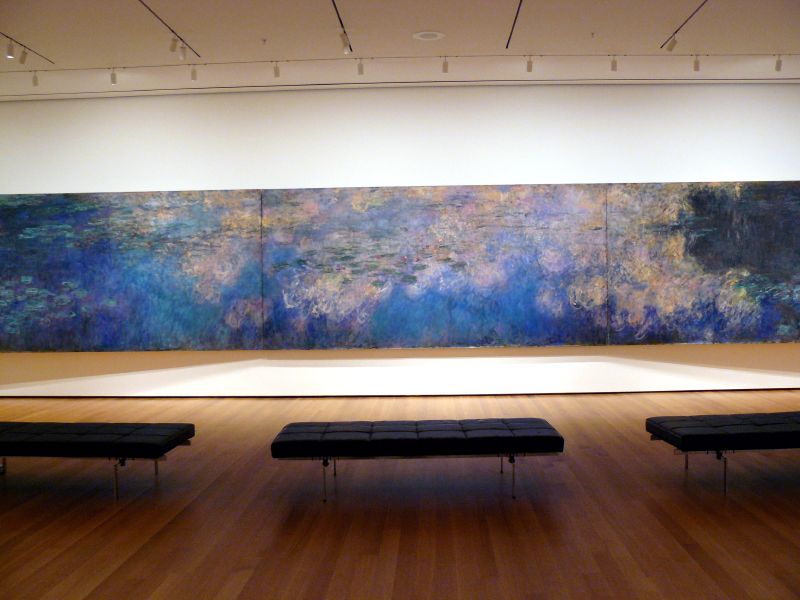
Here are a couple of works of art that usually do this for the viewer: Rodin's Piata, and one of Monet's Waterlillies Series. They usually make the viewers wonder and marvel at how the artist can allow the viewer to enter the scene and feel what's going on. And which of us hasn't gotten so lost in a novel that we'd swear the people were just about real? Because the artist is empathetic and has the skills to write or paint, we see what they did, and feel it in our own hearts.


Click!
(Courtest, Web Gallery of Art)
 
File:WLA moma Reflections of Clouds on the Water-Lily Pond Monet.jpg
(Courtesy, Wikipedia Commons)

Maisel points out that this ability to set yourself aside isn't normal. Who does that just for fun... set your own ego out to dry and inhabit the very skin of someone else? Most people can be compassionate and sympathise with someone else but to empathise is special. Maisel says this about empathy:

It is rather a certain kind of insight, an ability to correctly identify the thoughts and feelings -- even the whole inner reality -- of another person.

And further along he points out that the artist who empathises most can often have the hardest time maintaining sufficient boundaries between herself and the subject.

Ever get so lost in imagining the adventures and trials of an ancestor that you dream about them or think about them all the time? Have they entered our consciousness in an overly deep way? Maisel points out that empathy is the key to a deeper understanding of someone else... but don't get lost. Tricky, that!


The URL for this post is: http://nutsfromthefamilytree.blogspot.com/2013/02/the-creative-process-can-we-get-some.html

Thursday, February 7, 2013

Treasure Chest Thursday: The Barque Tiberius Brought Them

Last fall when on a trip back east to see Mom and the family, we went to the Frostburg Museum over in the old Hill Street School. Frostburg is the tiny Western Maryland town where Mom and Dad grew up, met, got married and where almost the entirety of the first few generations of my tree come from. So I was excited to see what the museum had and how it might relate to the family.

The first floor was super fascinating and we all roamed around looking at an amazing variety of stuff that we had some familiarity with. There's a small room with a lot of personal family history items relating to some of the families of the town that go way back. The Porters, The Workmen, and the Troutmen families all had genealogies there.

In that small room a couple of document facsimile were presented in glass cases. I took a close look and then with the permission of the docent, photographed them. I noticed the ship's list from the Barque Tiberius and knew it fit into our family's history but just as I was puzzling out where and who, one of our group drew my attention away to some other item, equally fascinating. It was like that all day! A wealth of relevant items to look at and consider in the ongoing process of understanding the world my ancestors inhabited. It was hard to take it all in and we plan to go back when I visit next time.

Back home and months later I'm sitting thinking, hey what about that Barque Tiberius? So I googled it and found a link to a transcription of the manifest and some very interesting notes which you can see here. Seems that it sailed from New Port, Wales to Baltimore, Maryland, and arrived in Baltimore 11 September 1838. Then I read the top of the manifest:

A List of Passengers on board of the American Barque Tiberias of Boston U.S., whereof George Sears, is Master, bound from New Port to Baltimore, U.S., burthen 299 tons Reg.
Columns represent: Name, age and occupation. The intention of all is George's Creek Co.* except Mary Bannista who is for Baltimore.
 
On board are three people who interest me to the max! They are:
Diana Thomas (1832 - 1871), my 2nd great grandmother, who was only 6 years old.
Benjamin Thomas (1793 - 1846), age 45, a collier (miner), and his wife,
Hannah (Evans) Thomas (1798 - 1968) age 40. Together, they are my 3rd great grandparents.

Holy-moley!! Seeing that just stops me in my tracks. Imagine! Benjamin with his entire family, all ten of them, confined to a small ship of just 299 tons, making their way for 46 days to cross, to the George's Creek Coal fields in a place they have never been to or seen. And with an infant child, Jane.

There's another Thomas family on board and in some way, I do hope they were connected, these two Thomas families, so as to be able to share the great adventure of their lives.

I feel for this family and don't have many details of their existence at hand which I can share with you. I do know that mine work was hard and dangerous. But I also know that the George's Creek Coal fields were the richest in the state, or adjoining states too at that time, and the miners who worked it prospered.  They raised large well-fed families and eventually purchased their own homes. Their children had good educations and they prospered as well.

Mom found one mention of Benjamin and Hannah in a small publication, The Lonaconing Mining Journal, 1837 - 1840, which is the recording journal of the mine manager. It was transcribed by Katherine Harvey about 1976. In it is recorded that Benjamin and Hannah were making merry and drinking on a Sunday evening at someone else's home, and arrested for being drunk! Here's the story. On Sundays, and after a long hard week of work, someone in the community opened their home to serve as a public house, a pub. Bars were outlawed by the mining company who kept an iron hold on the morals of their workers. It did not serve their best interests to have hungover miners working on Monday morning. So it seems that off went Benjamin and Hannah to have some downtime with neighbors. And they got caught by the mining company!

Also on the link, and written by Patricia Thomas, whose husband is also a direct descendant of Benjamin and Hannah is the following:

The Barque Tiberias appears to have left Wales on 31 June 1838 and is 109 feet long. The voyage took 46 days to cross from Newport, Wales to Baltimore, Maryland. The names of 76 passengers appear on the manifest. A cargo of 3,689 pieces of railroad iron was also on board. Most were men (and their families) hired as colliers (miners) due to mass recruiting by the George's Creek Coal and Iron Company in Allegany County, Maryland.

I thank Patricia Thomas for this paragraph, above.


In the Frostburg Museum, The ships register of the Barque Tiberius!

My 3rd GGF Benjamin Thomas and 3rd GGM Hannah Thomas on the Barque Tiberius roster along with my 2nd GGM Diane Thomas.


The Frostburg Museum now residing in its permanent home at the Hills Street School in Frostburg Maryland. There is much local history within its walls!

Mom and Brother look at her high school graduating class photo on display at the Frostburg Museum while our docent, Ralph, looks on.


Treasure Chest Thursday is a blogging prompt of GeneaBloggers. Find out more here.

The URL for this post is: http://nutsfromthefamilytree.blogspot.com/2013/02/treasure-chest-thursday-barque-tiberius.html

Wednesday, February 6, 2013

Wisdom Wednesday: This Week's Stuff I Learned

I've learned some stuff this week. Nothing really big, but just enough to make me feel like if it continues to go in this direction, I can eventually find my genealogical way out of a paper bag. I like posting on Wisdom Wednesdays, one of GeneaBlogger's blogging prompts, as a way to keep score and hold myself accountable. Here's the post last week so you can see what was going on then, if you care to.

Citing Sources. I have spent some time this week on good ol' Cindi's List checking the usual places where I can learn about citations and how to state them properly. That's where I began my search for an agreeable learning experience because frankly friends, I did not think sitting in a corner with Evidence Explained for a year and a day was going to do it for me. I gathered up all of my citation reference material and examined it for what might work for me and it engaged me in a new way such that I could see that what was needed was a visual representation of citing sources.
Here's what I found and I immediately had a gut reaction to it: hey, this rocks my world because this little gem is going to save my genea-life. It comes for the guru to us all, Elizabeth Shown Mills, of world famed, Evidence Explained. She has given me hope that I'll not always be at sea when it comes to citations. I'm off to download her book now.
Look at this, below, from her web site under the tab, "Sample QuickCheck Models". It's brilliant! It's like she designed it just for me, the experiential visual learner! I'm thrilled. So thank you, Elizabeth Shown Mills, wherever you are right this very minute! Here's an e-hug:)


Thanks Mom! Mom has great stuff. I'm a second generation genealogist and spent the first year and more wondering if there was anybody left in the world for me to find because Mom's tree is gigantic! If the line ends at a brick wall, you can bet she and Aunt Betty have been hammering at it for quite a while.
But then as the ensuing months went by I came to see that we complement each other perfectly: she loves adding people to her Big Tree and I love weaving all the stories together into the family chronicles, no matter what the form. I am especially appreciative this week because one of the items on the to-do list was to go back and review the stuff in the spiral notebooks I call, Conversations With Mom. Each morning when I call to see how we are, after the cat stories, the talk eventually rolls around to the ancestors. She tells me who she's working on and I teller her how much I don't know by asking stupid questions. And, I write it down in spiral notebooks. So it was time to browse through the three I have so far going back at least three years. Now I'm asking Mom more questions... and hopefully they are less stupid. Aren't I lucky to have Mom to ask about all the ancestor stories? I think so.

The Family History Writing Challenge  Wow! This project is such a valuable resource for me that I feel like I fell into a gold mine! Thank you Lynn Polermo, who organized this festival of writing, and all the participants and seasoned writers who stop by and throw out baskets of pearls:) Until this challenge I didn't know how much I could write a day if I was ready. All I need is a good cuppa whatever and my resources and sources in order and at hand, then I can chase up to 1,000 words a day. Had no idea. Not a clue.

Now that I've been doing this tally on Wednesday I'm more focused about keeping the learning moving along. Am thinking that once the Writing Challenge is over I'll jump into the world of webinars. Yeah, that sounds like a whole lotta fun. And I want to sign up real soon for the Chula Vista Genealogical Society's workshop day on DNA with CeCe Moore on March 30. Randy Seaver over in the blog neighborhood at Genea-Musings wrote about it here. Yeah, I gotta go do that because I'm sitting here waiting for my results to come back from 23andMe, and I want to play with them when they get here.

Photo of the Day from the Archive:
 

Mom fixes my hat, Easter, about 1951.


The URL for this post is: http://nutsfromthefamilytree.blogspot.com/2013/02/wisdom-wednesday-this-weeks-stuff-i.html

Tuesday, February 5, 2013

Talented Tuesday: Mom Sings in a Choir

Last week on Tuesday I continued writing about the musical talent on Mom's side of the family and you can read that post here. Talented Tuesday is a blogging prompt from the fascinating folks at GeneaBloggers, and you can click through and see all about here: Talented Tuesday.

Mom's family is almost entirely Welsh on her Dad's side. Her grand father Daniel Williams (1852 - 1920) was born in Wales and her family attended a church founded by Welshmen, The Congregational Church of Frostburg, Maryland. The original founding documents are mostly in Welsh. They were found in an attic, given to Aunt Betty who is a member there, and she gave them back to the church.

There's Mom in the church choir in the photo below, seated third from the left in the front row. Looks like she was in her teen years. And there's her best friend next to her on the left, and on the end her sister, Dot. Mom liked choir... she said so.

In doing some general background research on the Welsh people who immigrated and landed in upstate New York -- in hopes of understanding enough about them so that I could get a clue and find Daniel's siblings and mother who we have a photo of, taken possibly in the 1890s -- I googled around. What I found was a really nice write up from the Oneida County Historical Society about the Welsh community there. In it was this: "Pomeroy Jones wrote in 1851 that the Welsh are a nation of singers." And I learned about Welsh singing societies and their spring competitions called Eisteffods.

The Welsh immigrants who came to the Frostburg, Maryland area brought this love of music, and particularly singing, with them. Sometimes in the tiniest of details, the entire character of an ancestral line is revealed.

When I look at this photo and then look at the other musical folks in this line in particular, I can feel their love of music... and think it might be part of the Welsh character. How else do you explain that an immigrant coal miner, Daniel Williams, supported his son Joe's interest in music and somehow got him into one of the most prestigious music schools of the day? Amazing!


Thanks to Aunt Betty for this image.


The URL for this post is: http://nutsfromthefamilytree.blogspot.com/2013/02/talented-tuesday-mom-sings-in-choir.html

Monday, February 4, 2013

Amanuensis Monday: Nehemiah Newans Pension Letter

Amanuensis Monday

What's an Amanuensis, you say? It's a copyist: someone who sits like a crazy person squinting their eyes and probably ruining eyesight to read that old document hand-written so very long ago and type it out. We do because we love:)
Nehemiah Newans (about 1740 - 1820) is one of my four Revolutionary War ancestors, and right now the one that has my attention. You can see more about him using the page tab above where you'll find a rough timeline of his life. Today I'm going to attempt to transcribe the next and possibly the most interesting part of the letter packet sent by him in hopes of getting a pension out of the War Office for his service in the Revolutionary War.


To the Hon: the Secretary at War of the United States of America (corner folded over)
The memorial of Nehemiah Newans of the town of Canandaigua in the county of Ontario and the State of New York, Humbly showith, that he the said Nehemiah Newans is a citizen of the United States, that he is now Seventy years of age~~
That he served this country in the War of the Revolution, against the Common Enemy ~~ That he entered the service as a Sergeant, in the Pennsylvania line in Gen. Waynes Brigade ~~ That he afterwards entered the company of Capt. Finley as a Sergeant, which was the first Company in the first (?) Regiment of the Pennsylvania line and commanded by Col. Butler ~~ That while in this Company, at the Green Springs near James River in Virginia, he received a wound through the left knee by a musket ball, in an engagement with the enemy ~~ That he was removed to the hospital in Hanover, and while there, saw the enemy of Lord Cornwallis marched thr’o that town, after their defeat ~~ That after this, he with all the other who were at Hanover /wounded/, were removed to Williamsburg; That after he was recovered from his (?) wound, he was ordered to York in Pennsylvania, on the Recruiting Service, where he remained until ordered to join his own Company in Lancaster, in which he served till the end of the war, and then was honorably discharged, by Col. Butler, in Lancaster ~~ That in the year 1796 he removed into the State of New York, and on that journey, he lostHis discharge ~~ And he by leave further (? ?) that he never received any pension from the United States ~~ That he continues to reside therein, and is attached to its government nd institutions ~~ That he is unable to labour ~ That his right arm having been broken, prevents his using it. ~ That he is very frequently disabled ~~ That he is in “reduced circumstances”, and staunch in (?) of the aid of his country, as is providence in a late law of the United States, (passed?) the 18th day of March 1818, entitled “An Act to provide for certain persons, engaged in the land and naval service of the Untied States, in the Revolutionary War” ~~ And the said Nehemiah Newans, on this Seventh day f April, in the year of our Lord, one Thousand Eight Hundred and Eighteen, being duly Sworn, doth say, that the foregoing declaration, and Statements, contained in this his said declarations, and Statements, contained in this his said memorial, are True, and further said not ~~~~~~~~~~~~
Sworn to and Subscribed this Seventh day of April, in the year 1818 ~~ before me, a Judge of the CourtOf Common Pleas, in and for the CountyOf Ontario & State of New YorkThoms Citweter (?)


I got totally lost in transcribing this one! Found it really dramatic as the pension application letter delivered Nehemiah Newas' war history. Here are the high points:

* Sergeant, in the Pennsylvania line in Gen. Waynes Brigade
* entered the company of Capt. Finley as a Sergeant, which was the first Company in the first (?) Regiment of the Pennsylvania line and commanded by Col. Butler
* Green Springs near James River in Virginia
* Wounded: left knee at above
* removed to the hospital in Hanover
* while there, saw the enemy of Lord Cornwallis marched thr’o that town, after their defeat
* ordered to York in Pennsylvania, on the Recruiting Service,
* remained (in York PA) until ordered to join his own Company in Lancaster in which he served till the end of the war
* honorably discharged, by Col. Butler, in Lancaster
* in the year 1796 he removed into the State of New York

Now I can go off and see what I can find about these units and locations. One thing I already know is that he met and married my 5th GGM, Catherine Kepplinger, in York and this gives me a reason behind why he might have been there. But, and here's where the plot thickens as they say, he never returned there after the war. This document puts him very near York at the end of the war and in Lancaster. What the heck happened??!!


The URL for this post is: http://nutsfromthefamilytree.blogspot.com/2013/02/amanuensis-monday-nehemiah-newans.html

Saturday, February 2, 2013

Surname Saturday: The Wonderful Whetstone Family

True confession, I like my Whetstone ancestors. Some of my kinfolk give me the chuckles with their misbegotten adventures and I enjoy them because it's fun to watch from the relative safety and comfort of my home as they stumble their way through records and leave a trail a mile wide. But the Whetstones are different: their records are about service to country and community, and of course family.

There's even a major (to us) genealogical fist-fight that's been going on for years about another Jacob Whetstone Jr. from the Somerset PA area (and not our Jacob Whetstone Jr. 1776 - 1889 form Berks County) and a book's claim that it was this other Whettstone line that descended from Capt. Jacob Whetstone Sr. (1738 - 1833) who served in the Revolutionary War. This particular book is given as a source for some applications to the DAR. All of this confusion finds perfect breeding ground throughout the 21 Member Trees on Ancestry.com, and probably counting upward every hour.

The bottom line is that our Jacob Whetstone Jr. was the son of Captain Jacob Whetstone and was born in Berks County, Pennsylvania. The other guy, bless him, was born in Somerset Pennsylvania, I know not when, and perhaps ended up out west... but I try not to pay too close attention and clog up my brain.

We found much more about Capt. Jacob Whetstone from the vast and fabulous Pennsylvania Archives on-line here. Any lookie there! There's a portal just for us genealogy freaks!

Also need to mention the vast array of spelling of the name: Whetstone, Whetstein, Wetzstine, Wettsttne, and the Dutch version, Van Der Woestyne. Maybe Probably I don't have them all;) Good grief!

So let's start the countdown, and look at Mom's mother's Whetstone line as far back as we can.

1. Diane Kelly Weintraub

2. Francis Patrick " Pat" Kelly
 1916 - 2007
3. Virginia Williams, living and loving it

6. Cambria Williams 1897 - 1960
7. Emma Susan Whetstone 1897 - 1956

14. Joseph Hampton Whetstone 1858 - 1938
15. Catherine Elizabeth House 1865 - 1947
Joseph Hampton Whetstone followed his father's chosen occupation as a stone mason in a time when even the streets were cobble stones and needed to be set by hand. They lived just on the outer edged of the town of Frostburg, Allegany, Maryland.
Catherine Elizabeth kept a garden and was often seen working in it sporting her large sunbonnet. Joseph turned a portion of the basement into a cold cellar with his masonry skills so that what Catherine grew would be well kept over the winter.
When Mom's mother, Emma, was small and maybe less than 8 or 10 years old, their house in town burned to the ground. The entire family was left in the middle of January with only the clothes on their backs. Afterward, Joseph did two things: he joined the Frostburg Fire Department, all volunteers, and built for his family a fine house on the outer edges of town, the one with the big garden and cold cellar in the basement.
Joseph H. and Catherine were the love birds in this line-up. Mom has letters they wrote back and forth while he was away working as a stone mason. They are sweet and tender. Interestingly, she was his housekeeper after his first wife, Amanda Dennison, died. They eventually married.
They had 12 children in all and they are:
Charles Albert Whetstone 1887 - 1965
James Franklin Whetstone 1889 - 1960
Clarance Hampton 1891 - 1976
Grace Elizabeth 1893 - 1959
Peter Whetstone 1895 - 1906
7. Emma Susan Whetstone 1897 - 1956
Edna Whetstone 1900 - 1922
Margaret Ann Whetstone 1902 - 1996
Joseph Edward 1903 - 1972
Leslie Laurance Whetstone 1905 - 1995
Viola Whetstone 1906 - 1997
George Washington Whetstone 1911 - 1975

28. Joseph Edward Whetstone 1816 - 1897
29. Sarah Wagoner/Waggoner 1825 - 1880
Joseph Edward and wife Sarah were born and died in Garrett County Maryland in and around the tiny community of Grantsville. He was a stonemason. The winters are harsh here and my guess is that daily life then was not easy. I blogged not too long ago about a letter Sarah received from her mother, also named Sarah, just before she died and you can read it here to get a feel for the times.
They had these 13 children:
Elizabeth Jane Whetstone 1842 - 1896
Susan Emily Whetstone 1844 - 1877
Peter Yeast Whetstone 1847 - 1918
William Whetstone 1850 - ?
Charles Whetstone 1851 - 1880
Charlotte "Lottie" Whetstone 1852 - 1872
Mary Alice Whetstone 1856 - 1862
14. Joseph Hampton Whetstone 1858 - 1938
G. O. Theodore Whetstone 1860 - 1861
John Edward Whetstone 1862 - 1896
Bradford Whetstone ?
Zoe Violet Whetstone 1864 - 1948
Frank Whetstone 1869 - 1959

56. Jacob Whetstone Jr. 1776 - 1869
57. Christiana Frantz 1744 - ?
Jacob and his brother Solomon married the Frantz girls: Jacob Jr. married Christiana and Solomon married her sister Catherine.
By tracing the birth location of the children we find this couple first living in Berks County, Pennsylvania, then a brief stop in Somerset County (and thus the confusion in records mentioned in the introduction), and lastly in Selbysport, Garrett, Maryland, a move taken as best we can guess about 1815. He was a farmer.
They had the following children:
Female Whetstone born in 1792
Samuel Whetstone 1794 - ?
Female Whetstone born 1795
John W. Whetstone 1796 - 1848
Female Whetstone born 1804
Hannah Whetstone 1808 - ?
Catherine Whetstone 1810 - 1893
Daniel Whetstone 1812 - 1888
28. Joseph Edward Whetstone 1816 - 1897
Rebecca Susan Whetstone 1803 - 1881

112. Jacob Whetstone Sr. 1738 - 1833
113. Anna Marie Schaeffer 1748 - ?
Here's our Revolutionary War ancestor! Mom writes the following in her Notes on Family Tree Maker:
The Whetstone's were from near Mckeansburg and are on record for Pine Grove, Twp. Their company was recruited largely from the North side of the Blue Mountains.
Aug 1777 Jacob Whetstone's Company  mustered under Coloniel Daniel Hunter of Oley, and was on duty around Philadelphia, participating in the Battle of Germantown under General George Washington. The return roster of the company  is given as containing 49 men and 8 officers and includes the following: May 17, 1777
First Company Capt. Jacob Whetstone
Ensign: Heney Whetstone (spelled Wetstein), Conrad Sheffer, Rudolph Buzzard, Ludwig Herring,George Brouch.
Jacob Whetstone was a Captain in the Rev. War. He served from 05 Aug 1777 until 05 Jan 1778.
Their children are:
56. Jacob Whetstone Jr. 1776 - 1869
Solomon Whetstone 1775 - ?
Isaac Whetstone 1777- 1850
John Whetstone 1778 - ?

224. Isaac Whetstone about 1710 - 1789
225. Persus Hunsicker
Isaac came from Baden-Wurtenberg, Germany and his wife, Persus, was born in Tamaqua, Schuylkill, PA.
They had these children:
112. Jacob Whetstone Sr. 1738 - 1833
Abraham Whetstone 1740 - ?, who served in the Berks County Militia in the Revolutionary War.
Henry Whetstone 1742 - ?


28. Joseph Edward Whetstone 1816 - 1897, as a younger man


28. Joseph Edward Whetstone 1816 - 1897, later in life
 
14. Joseph Hampton Whetstone 1858 - 1938 as a younger man.

14. Joseph Hampton Whetstone 1858 - 1938, on right in his
Frostburg Fire Department uniform.

14. Joseph Hampton Whetstone 1858 - 1938 and 15. Catherine Elizabeth House 1865 - 1947
with grandchildren. Mom has the big bow.

15. Catherine Elizabeth House 1865 - 1947, later in life,
standing in her garden behind the house.

 
6. Cambria Williams 1897 - 1960 and 7. Emma Susan Whetstone 1897 - 1956.
Emma was the daughter of 14. Joseph Hampton Whetstone 1858 - 1938 and 15. Catherine Elizabeth House 1865 - 1947.


The URL for this post is: http://nutsfromthefamilytree.blogspot.com/2013/02/surname-saturday-wonderful-whetstone.html

Friday, February 1, 2013

The Creative Process: One Brick From the Wall

It was the late 1970s and I was working as an art director for a New York City ad agency. We worked in creative teams, one art director and one writer to a team, under Big Sherm, or Sherman the Creative Director. As a reward Big Sherm sent a couple of art directors off to a creative skills building workshop one Friday afternoon. Funny thing, I picked up some ideas that day I still use, and continue to use in genealogy all the time. They're kinda basic, really, but just thought I'd mention what happened to see if any of it is helpful to you:)

It was a big room with those round tables you see at conferences, 8 to a table. I picked a genial looking group of friendly, laughing folks and sat in an empty chair. The speaker wasn't much older than most of us but had command of the room right away. "OK, here's what we're going to do. Each table is going to come up with as many uses for a brick as you can think of. Somebody volunteer to write all the uses down and keep a list. Let's see which table gets the most. That's the objective: the table with the longest list wins. You have 15 minutes for this. Now GO!"

Seriously?! You have to be kidding, this is silly! Nervous laughter, then giggles, but just a few. Would there be a prize, someone wondered. Certainly bragging rights, another offered. Then we got down to business.

The first wave was full of all the obvious and practical uses and functions for a brick. Maybe we had a dozen on our list. Someone pointed out that there was no test of rationality or practicality for this assignment and the goal was to make the longest list. Then we really took off... and got kinda crazy!

After 10 minutes we ran dry. But we looked at the clock and knew it was crunch time so we dug deep to find even more uses for a brick. Some one, I forget who, started analyzing how practical and worthy the uses were because it was getting real nuts. About that time the presenter walked by and interjected that we were not to evaluate but simply make the very longest list possible. We took off again!

At the 15 minute mark we were bone dry, but time was up. Then the presenter told us we had 10 more minutes. Groan! How can we do this for 10 more minutes? But we did. Then a magical thing happened: we really let it all flow and came up with some of the most inventive solutions of the day. Some were surprisingly good.

As I remember, and I probably don't because it was so long ago, our table had about 38. The high table had at least 10 more than that. Imagine! Almost 50 uses for a brick!!

So what is it that I remember and took away from that seminar? When doing creative problem solving, the obvious solutions might be the good solutions, but they just might not be. When you think you've run out of options, have some coffee and give it a moment because you haven't gotten to the good stuff yet. Don't worry when you get to a dry patch, because the better stuff is bubbling just below the surface. Wait. It will get here. And go a little crazy.. maybe your ancestor did do that wild thing you just thought of.

I think, looking back on it, that seminar was all about persistence. That's a big component of the work we do as genealogists and creativity in general. And trusting yourself to wait out the rough patch and knowing that better stuff is waiting... just past the next brick.


Nutshell analysis and the obvious take-aways:
* Sometimes the obvious answers are right, and sometimes they are not.
* When brainstorming, it's usual and normal to turn dry after a short length of time. Doesn't mean that's all you have and that you're finished. Don't be fooled.
* Don't judge yourself. Just feel free to think of all the possibilities no matter how ridiculous. You can sort later.
* Give it time. Sit with it. Go slow. Maybe take a break and think of something else if that works for you.


Photos of the day from Aunt Betty's Archive of the Daniel Williams family:


Thomas Williams 1890 - 1950, William Williams 1894 - 1964, James Thomas 1882 - 1936, 
and their father  Daniel Williams 1852 - 1920. 

Jane Price Williams 1862 - 1939, wife of Daniel Williams and mother to the boys, above
with her brother James Price 1865- 1933.

That's Mom and her sister Dot holding hands in the front row with their mother,
Emma Whetstone Williams 1897 - 1956.

Daniel Williams family home in Ocean, Allegany, Maryland.


The URL for this post is: http://nutsfromthefamilytree.blogspot.com/2013/02/the-creative-process-one-brick-from-wall.html